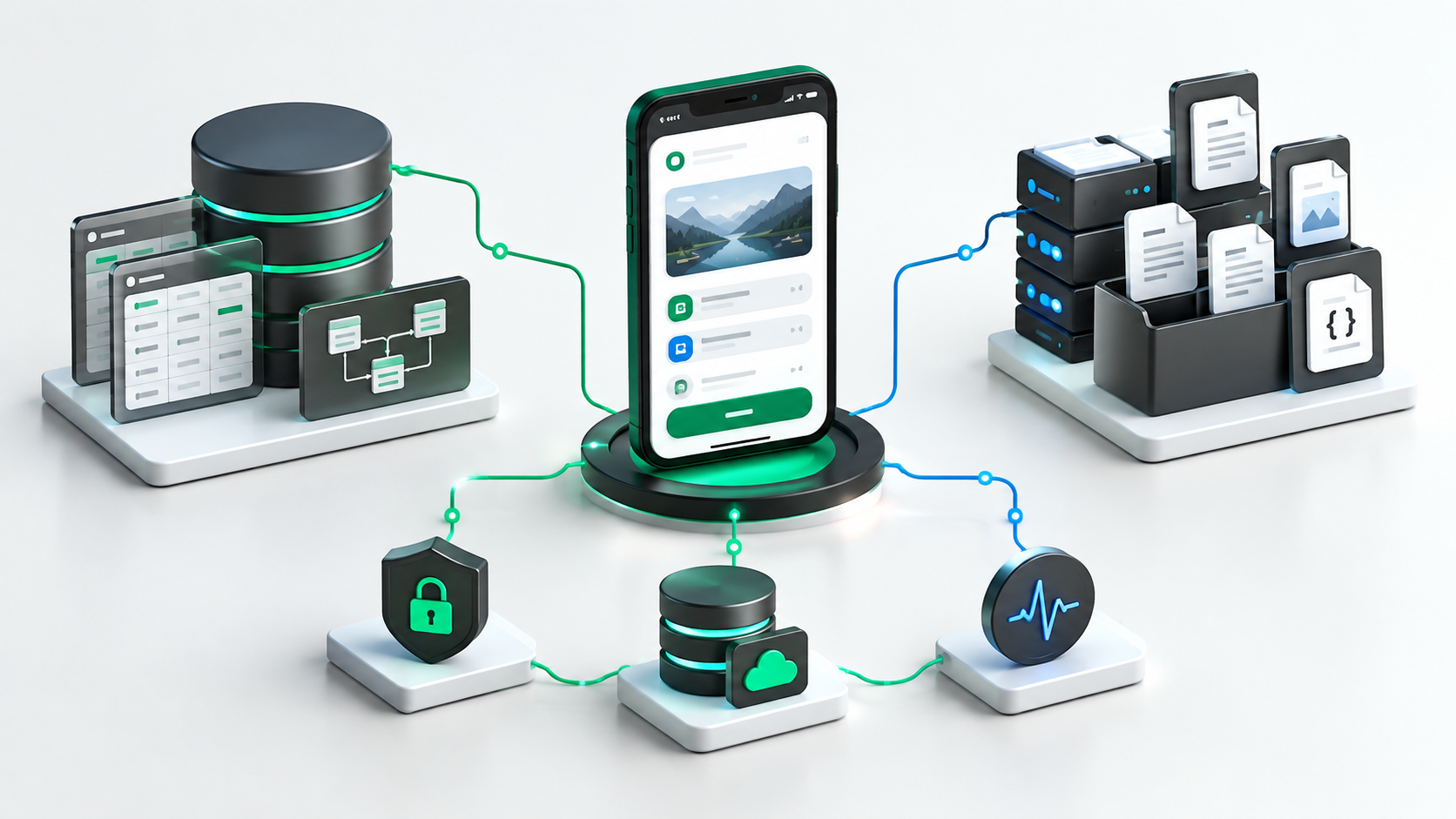
A product launch date is not a go-to-market strategy.
Shipping an app, platform or SaaS product proves that something can be used. It does not prove that the right people understand the problem it solves, trust the offer, find it through a viable channel, adopt it successfully or keep using it.
A useful UK go-to-market plan connects two workstreams:
- Product readiness — the product can deliver its core promise reliably enough for the intended users.
- Market readiness — the team has a focused segment, credible message, route to reach it and a way to learn from real demand.
Both workstreams need one shared evidence plan.
This guide is for UK founders and product leaders preparing to launch a digital product. It is not legal, tax, regulatory or financial advice. Products in regulated sectors require appropriate specialist review.
Start with the smallest credible market
“UK businesses” is not a launch segment. Neither is “everyone with a smartphone”.
Choose a narrow initial audience that has:
- a recognisable and urgent problem;
- a clear trigger for seeking a solution;
- a current workaround or alternative;
- an accessible route for research and early distribution;
- enough common context that one message can resonate.
Define the segment in practical terms:
We help [specific group] who are trying to [job or outcome] when [trigger or context], but currently struggle because [specific constraint].
For example, this does not require a fictional customer profile. It requires real observations from conversations, workflow research, support records or early usage.
The UK government advises businesses developing new products and services to test with customers, understand needs, explore willingness to pay and identify what would make the offer meaningfully different. See GOV.UK’s product-development guidance.
Build positioning from evidence
Positioning is not a slogan. It is the clear answer to why a specific audience should consider your product instead of its current alternative.
A useful positioning statement should cover:
| Element | Question |
|---|
| Audience | Who is the product for first? |
| Problem | What urgent or expensive problem are they trying to solve? |
| Current alternative | What do they use, tolerate or do manually today? |
| Product promise | What valuable outcome does the product help them achieve? |
| Proof | Why should they believe that claim? |
| Boundaries | Who is it not for, or what does it not solve yet? |
Avoid claims you cannot prove. In UK marketing, the CAP Code requires marketing communications not to mislead and expects documentary evidence for objective claims that can be substantiated. This applies to claims on business websites and other marketing channels. See ASA guidance for businesses.
That means avoiding unsupported phrases such as “best”, “guaranteed”, “market-leading” or “saves every team hours” unless you have suitable evidence and the claim is framed accurately.
Select one primary route to market
Early launch plans often fail because they list every possible channel without deciding where to focus.
Choose one primary route based on where the first target segment already looks for help, compares alternatives or makes decisions.
| Route | Often suitable when | What to test |
|---|
| Founder-led sales | The problem is complex, high-consideration or needs trust-building | Which conversations convert into qualified next steps? |
| Product-led/self-serve | Users can understand and try the core value quickly | Can users reach a meaningful first outcome without heavy support? |
| Content-led discovery | Buyers actively research the problem before choosing a solution | Which questions, pages and offers generate qualified attention? |
| Partnership-led | A trusted organisation already serves the intended audience | Does the partner remove a real distribution or credibility constraint? |
| Community or account-led | The early segment is concentrated in identifiable groups or organisations | Can you reach the right people with a useful, credible message? |
A first go-to-market motion can combine channels, but it should have one primary learning focus. For example, content may support founder-led sales, while partnerships may open qualified conversations. The plan should still state which route is responsible for the most important learning.
For partnership thinking, see our guide to strategic partnerships for UK market entry.
Treat product readiness and market readiness as equal work
| Product readiness | Market readiness |
|---|
| Core journey works for the intended user | Target segment is specific and reachable |
| Critical data, privacy and security considerations are addressed | Message describes a real problem and outcome |
| Onboarding supports first value | Proof, objections and pricing assumptions are prepared |
| Support, monitoring and feedback routes exist | A primary channel and sales motion are selected |
| The team can respond to early defects | Measures define what the team will learn and change |
A polished product with no focused route to market can produce silence. Strong positioning without a usable onboarding journey can produce interest but little adoption.
Make the product and go-to-market teams share the same questions:
- What must a new user achieve in the first session or first week?
- What would prevent that outcome?
- Which evidence would show real demand rather than polite interest?
- Which product friction is damaging the sales or marketing message?
- Which objection reveals a genuine product, trust or positioning gap?
Build proof before increasing launch spend
Early proof should be proportionate to the product stage. It can include:
- evidence from customer interviews;
- a tested prototype or pilot;
- transparent product demonstrations;
- clear explanation of security, privacy and support boundaries;
- credible, approved customer feedback;
- documented workflows, integrations or implementation steps.
Do not invent case studies, testimonials, savings or success rates. If you use a testimonial or endorsement in UK marketing, the ASA says you should hold evidence that it is genuine and have permission to use it.
For an early product, it is often more credible to say:
- “Designed for [specific workflow]”
- “Built to help [audience] complete [task]”
- “Currently being tested with [defined audience]”
- “Join the pilot to help shape the product”
than to make broad outcome claims that have not been established.
Design the onboarding and support loop before launch
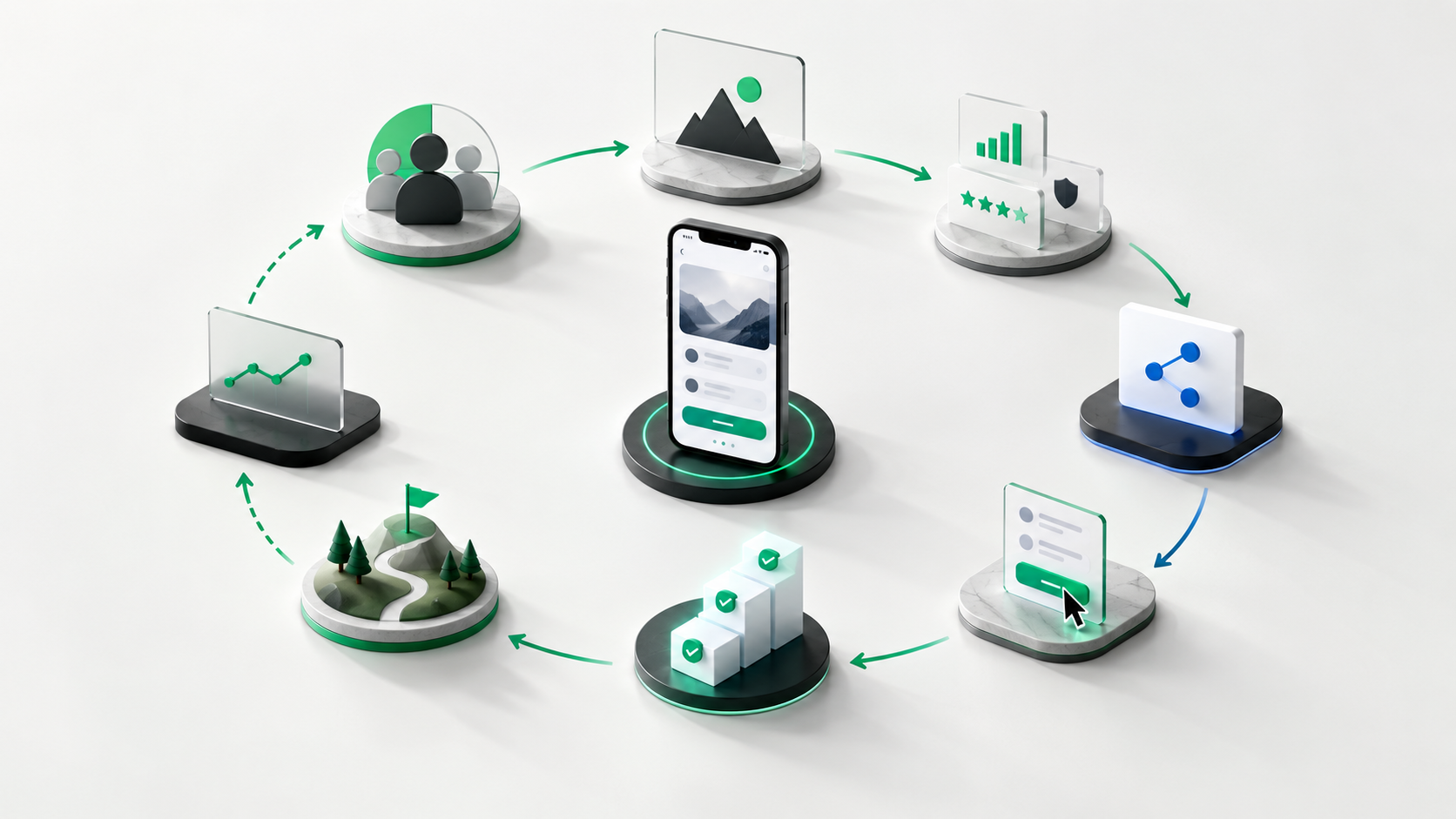
A launch is not complete when a user creates an account. It is complete when the team can see whether that user reached the intended value.
Map the first-value journey:
- Acquisition: How did the right person discover the product?
- Qualification: Why is the product relevant to their problem?
- Activation: What action shows they have received initial value?
- Support: Where can they get help if they are blocked?
- Retention: What recurring reason brings them back?
- Learning: How will the team hear about friction, confusion and unmet needs?
Define a small set of measures tied to that journey. Avoid a dashboard full of disconnected numbers.
For example:
| Decision | Useful evidence |
|---|
| Is the segment right? | Quality of conversations, conversion patterns and recurring problem language |
| Is the proposition clear? | Landing-page comprehension, sales objections and message tests |
| Does onboarding work? | Completion of the first valuable action and support requests at key steps |
| Is the product valuable enough to continue? | Repeat use, renewal signals or observed return to the intended workflow |
| Should we invest more? | Evidence of demand, achievable acquisition path, product reliability and retention potential |
See our guide to validating an app idea for a practical way to distinguish interest from meaningful commitment.
Use a 12-week learning plan
A 12-week plan is long enough to run disciplined experiments and short enough to avoid treating a launch as a fixed campaign.
| Period | Primary purpose | Output |
|---|
| Weeks 1–2 | Confirm segment, problem and message assumptions | Target-segment definition, interview plan, draft positioning and baseline measures |
| Weeks 3–4 | Test acquisition message and first-value journey | Landing-page, outreach or partner feedback; onboarding friction list |
| Weeks 5–8 | Run a focused market test | Evidence on qualified demand, activation, objections and operating workload |
| Weeks 9–10 | Improve the most important constraint | Prioritised changes to message, channel, onboarding or product |
| Weeks 11–12 | Decide whether to continue, adjust, expand or pause | Written decision record, next experiment and investment recommendation |
At the end of each period, ask:
- What did we expect?
- What happened?
- What evidence is strong enough to act on?
- What remains uncertain?
- What is the smallest next move that improves the decision?
This prevents a launch team from responding to every early signal with a major build, rebrand or channel switch.
Prepare UK-specific checks early
The UK angle should be real, not decorative.
Depending on your product and audience, check:
- whether the market message is clear and substantiated;
- whether personal-data processing needs specific privacy, security or contractual work;
- whether sector rules apply, such as financial services, health, education, employment or public-sector delivery;
- whether pricing, terms, cancellation or customer-support information is clear for the buyer type;
- whether direct-marketing activity follows appropriate privacy and marketing rules.
Where a controller uses a processor to handle personal data, the ICO explains that a written contract with specified terms is required. See its accountability and governance guidance. Obtain professional advice for decisions that depend on legal or regulatory interpretation.
Define the evidence threshold for more investment
Before spending more on paid acquisition, a wider launch or a larger sales programme, agree what evidence you require.
For example:
- a defined segment consistently recognises the problem;
- the message creates qualified conversations rather than generic traffic;
- users can reach first value without unsustainable manual support;
- the product can handle the expected workflow reliably enough;
- a realistic route to repeat use, retention or commercial commitment is emerging;
- critical trust, privacy and support gaps have a credible plan.
Conclusion
Go-to-market is a coordinated system, not a launch checklist.
Start with a narrow audience and urgent problem. Build a message from evidence. Select one primary route to market. Connect product onboarding to the promise that brought users in, then use a 12-week learning cycle to improve the most important constraint.
A launch date creates activity. A disciplined go-to-market plan creates evidence for the next decision.
Sources and further reading


 Hassan KhanHead of Strategy & Partnerships17 Sept 20269 min read70