How to Choose the Right App Development Company in the UK
Evaluate UK app development companies across discovery, delivery, security, ownership, communication and support using a practical supplier scorecard.
Muhammad YaseenFounder
17 Sept 20268 min read120
On this page
Choosing an app development company is not the same as choosing the most polished portfolio or the lowest initial quote.
The right partner should help you reduce product uncertainty, make trade-offs visible, deliver safely and leave you with appropriate ownership of the product you are funding. A company can have impressive-looking work and still be a poor fit for your budget, delivery stage, technical needs or working style.
Start by defining what your organisation needs, then assess every supplier against the same evidence-based criteria.
This guide is for UK founders, product leaders and business sponsors comparing app development partners. It is educational guidance, not legal, procurement or data-protection advice.
Start with your product risk
Before asking agencies for estimates, write a short decision brief.
It should cover:
the customer or operational problem you are trying to solve;
the intended users and their most important journeys;
what success would look like;
the known constraints around timing, budget, data, integrations and compliance;
what is still unknown;
what you need from a partner beyond writing code.
This protects you from receiving several confident-looking proposals for several different interpretations of the same vague idea.
If the product is still early, the best first engagement may be discovery, user research, a prototype or a technical assessment—not a fixed build proposal. Our guide to MVP versus full product can help frame that conversation.
Look beyond a visual portfolio
A portfolio can show style and public outcomes. It rarely tells you enough about the delivery process behind the work.
Build with FlutterCraft
Compare FlutterCraft against your scorecard
Bring your product goals, constraints and shortlist to a practical conversation about delivery fit.
Muhammad Yaseen is the Founder of FlutterCraft. He writes for founders and business leaders making high-stakes decisions about MVPs, digital investment, development partners, product validation, and sustainable growth.
Related articles
Continue with more FlutterCraft thinking for founders and product teams.
Ask for evidence that is relevant to your situation:
Area
Useful evidence to request
Product fit
Examples of similar user journeys, business models or delivery constraints
Discovery
How the team turns an idea into scope, assumptions, risks and testable decisions
Delivery
Delivery plan, milestones, roles, reporting cadence and approach to change
Technical quality
Architecture approach, testing strategy, code review and release practices
Security
How security is considered through development, access control and deployment
Ownership
Repository access, cloud-account ownership, documentation and handover plan
Support
Post-launch monitoring, bug response, platform updates and improvement process
Commercial clarity
Assumptions, exclusions, dependencies, change process and payment milestones
Do not expect confidential client material. A trustworthy supplier can still explain its working methods, show anonymised examples and be clear about what it cannot share.
The National Cyber Security Centre’s secure development and deployment guidance is useful here because it is designed to help organisations evaluate their own development practices and those of suppliers. It should inform proportionate questions, not become a box-ticking exercise.
Test discovery quality before testing delivery speed
A good partner should be interested in the problem, not only the requested solution.
Ask each supplier:
What would you need to learn before you could estimate this responsibly?
Which assumptions in our brief are most likely to affect scope, cost or timeline?
What would you recommend validating before full delivery starts?
Which requirements are essential for the first release, and which might be deferred?
Which technical, data or third-party dependencies could become delivery risks?
How would you handle a change in evidence halfway through the project?
What would make you advise us not to build this yet?
Be cautious if every conversation jumps immediately from an idea to a precise price, date and feature list without acknowledging unknowns. Certainty can be useful, but false certainty is expensive.
Use a weighted supplier scorecard
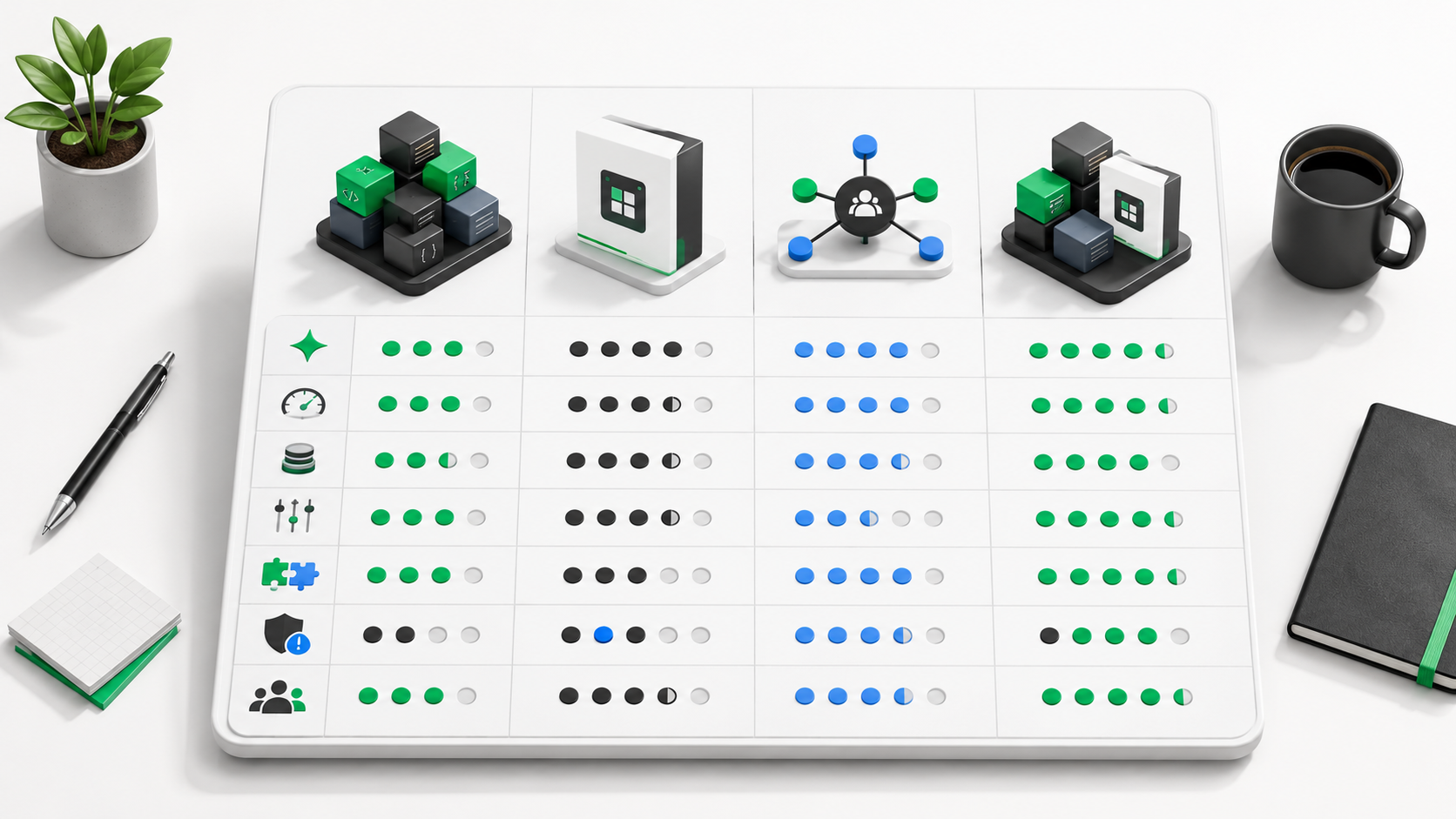
Create one scorecard before reviewing proposals. Score each company from one to five against evidence, not impression.
Criterion
Weight
What strong evidence looks like
Discovery and product judgement
20
Challenges weak assumptions, defines risks and recommends useful next decisions
Relevant delivery evidence
15
Work comparable in complexity, user context or operating model
Technical quality and security
15
Clear approach to architecture, testing, access, release and ongoing maintenance
Team and governance
15
Named roles, accessible decision-makers, reporting rhythm and escalation path
Ownership and exit readiness
15
Clear repository, account, data, documentation and handover arrangements
Commercial transparency
10
Explicit assumptions, exclusions, dependencies, change control and payment logic
Post-launch support
10
Defined support scope, monitoring, maintenance and improvement options
Multiply each score by its weight, then compare the evidence behind the total. The highest score should not automatically win. A supplier with a lower total may be better if it is uniquely suited to a critical constraint, such as a specialist integration or a required operating model.
The scorecard is valuable because it makes trade-offs discussable. It also gives internal stakeholders a shared reason for saying “not now” or “not this supplier”.
Assess delivery and communication, not only technical capability
Software delivery requires regular decisions. Ask how the relationship will work in practice.
Clarify:
Who owns product decisions on your side?
Who translates business needs into delivery work?
How often will you see working software?
How are scope, risks, blockers and decisions recorded?
Who can approve a change?
What happens when a key person is unavailable?
How will disagreements be escalated?
Which meetings are necessary, and which reporting can be asynchronous?
A team that communicates clearly about difficult choices is often more valuable than one that promises a frictionless project. You are looking for healthy transparency, not endless meetings.
Confirm security, data and ownership early
If the supplier will build or operate software that handles personal data, the commercial relationship should address data-protection responsibilities. The ICO explains that where a controller uses a processor, a written contract is required and must contain certain terms, including appropriate security measures and assistance with rights requests. Read the ICO’s controller–processor contract guidance with qualified advice where needed.
Practical questions include:
Who owns the source-code repository?
Who owns cloud accounts, domain names, app-store listings and third-party subscriptions?
Where will production data be hosted and who can access it?
Which subcontractors or third-party services will be involved?
How are credentials, environments and production access controlled?
What happens to code, data, documentation and access at the end of the agreement?
How will vulnerabilities, incidents and urgent maintenance be handled?
The NCSC recommends considering security across the supplier contract lifecycle, from selection through to contract closure. Its supply-chain guidance is a sensible source for proportionate supplier questions.
Read proposals for assumptions, not just totals
Two proposals can have the same headline price and represent very different commitments.
Compare:
discovery and design included before build;
platform scope: mobile, web, backend, admin tools or integrations;
test environments, quality assurance and device coverage;
data migration, content entry and third-party setup;
app-store submission and release support;
project management and stakeholder time required;
training, documentation and handover;
maintenance after launch;
contingency and process for scope change.
A proposal should make it possible to understand what is included, what is excluded and what would trigger a new decision. If a supplier avoids those questions, you may struggle to control scope later.
Red flags that deserve a follow-up question
These do not automatically rule out a company, but they should prompt more evidence:
A detailed fixed quote based on a very limited brief.
A portfolio without clear explanation of the supplier’s own role.
No named delivery team or unclear senior oversight.
A promise that security, testing or accessibility can be “added later”.
No plan for source-code, account or documentation ownership.
A contract that makes it hard to leave or take control of essential assets.
An estimate with no assumptions, exclusions or change process.
Marketing claims that cannot be supported with evidence.
In the UK, marketing communications must not materially mislead, and objective claims should be supported before publication. The CAP Code is a useful reminder to assess claims critically, including claims on a supplier’s own website.
Make the final decision in stages
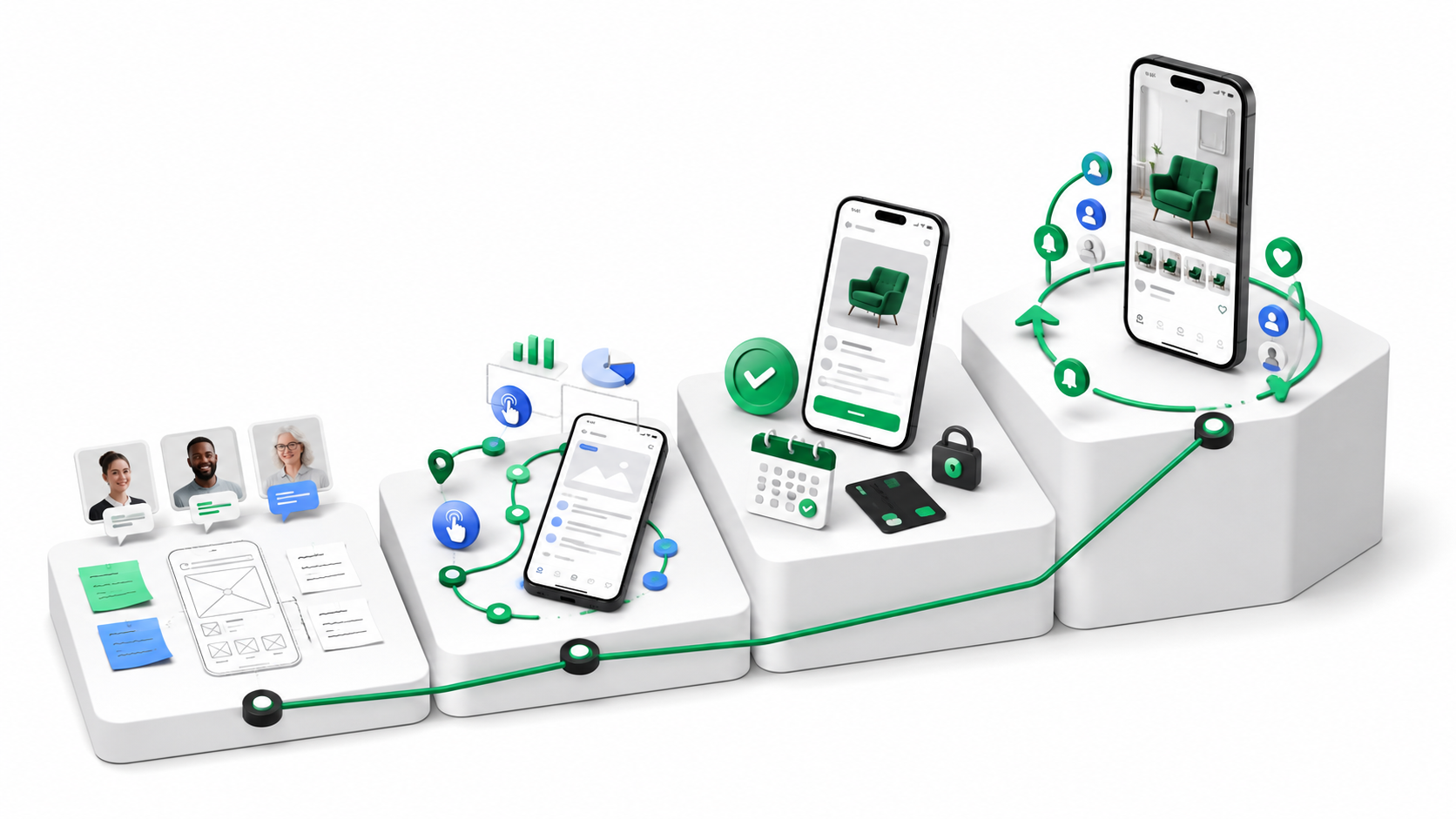
A sensible selection process often looks like this:
Define the problem, outcomes and constraints.
Create a longlist using relevant evidence.
Share the same concise brief with each shortlisted supplier.
Hold structured conversations using the same question set.
Score responses against your pre-agreed criteria.
Check references where appropriate, using focused questions.
Start with a discovery or assessment phase when material uncertainty remains.
Agree ownership, security, delivery governance and exit arrangements before significant build work begins.
The right partner may be the one that recommends a smaller first step, a different delivery model or even a pause while you validate demand.
Conclusion
Choose an app development company for the quality of its thinking, evidence, delivery discipline and working fit—not simply its sales presentation.
A strong partner should be able to explain trade-offs, surface risk, show how the product will be owned after delivery and welcome a rigorous supplier scorecard. If the evidence is not clear enough to make a confident decision, invest in discovery before committing to a large build.
A practical guide for international technology companies choosing UK partners for trust, distribution, integration or delivery, with a focused thesis and measurable first motion.



 Muhammad YaseenFounder