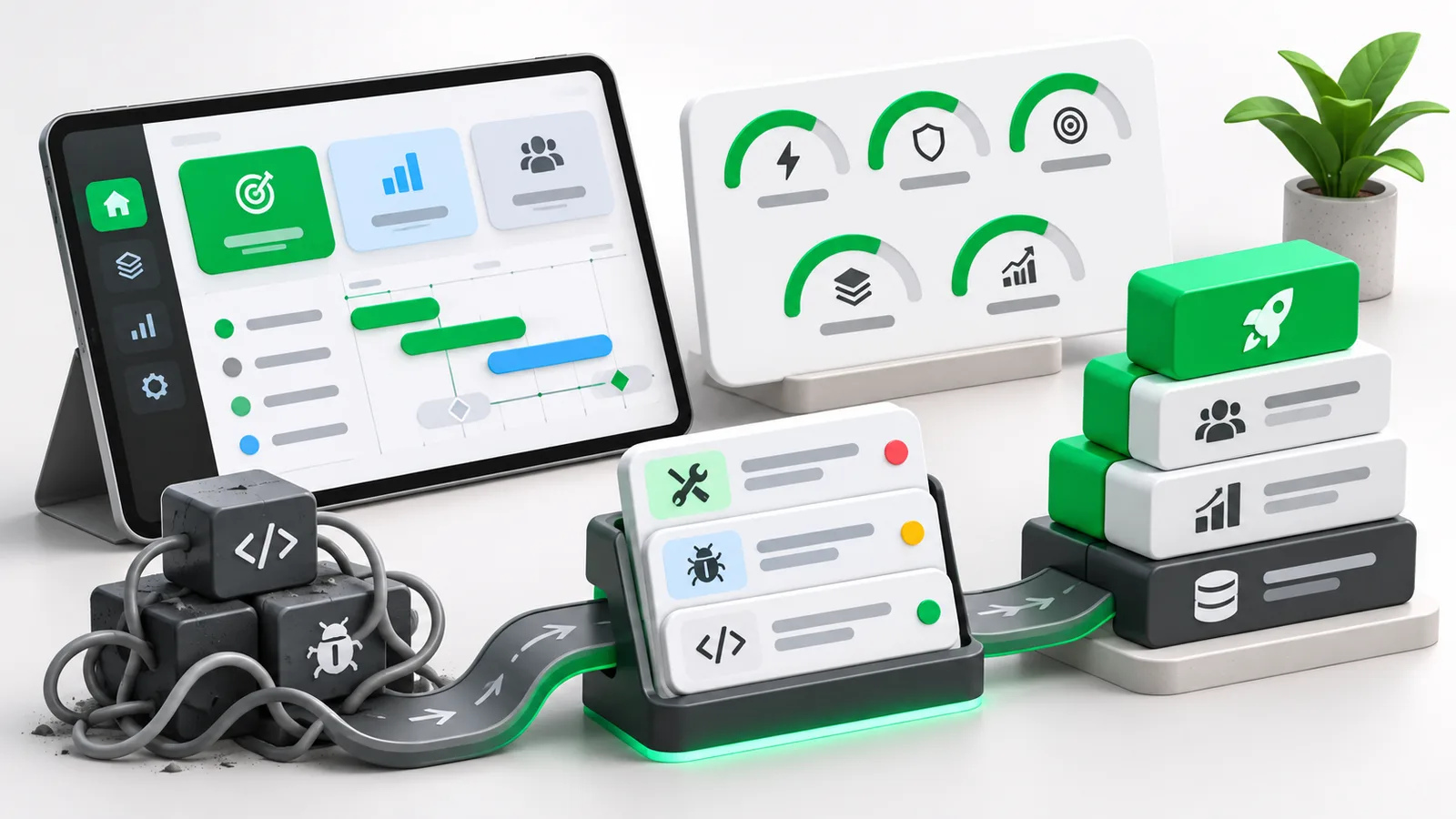
A delayed software project does not automatically need a rewrite.
The first job is to replace assumptions with a shared factual picture: what exists, what works, what is owned, what is accessible, what is unstable, what remains commercially important and what is actually preventing progress.
That distinction matters because a delayed project can fail for very different reasons. The primary constraint might be unclear scope, missing product decisions, weak architecture, unreliable releases, unavailable environments, supplier dependency, poor quality, incomplete data, unrealistic estimates or simply a team that has been asked to do too many things at once.
Starting again before identifying that constraint can discard valuable assets and reproduce the same management problem in a new codebase.
This guide is for UK founders and sponsors with a software project that is delayed, unclear or unstable. It describes a practical ten-day recovery assessment and a 30-day reset. It is not legal, contractual, cyber-security or financial advice; projects involving disputes, serious security incidents or regulated data may need qualified specialist support.
First, pause new promises
A rescue begins when the organisation stops adding uncertainty.
For a short assessment window, pause new feature promises unless they are essential to safety, contractual continuity or a genuinely critical business need.
That does not mean stopping all work. It means separating three streams:
- keep-the-lights-on work required to protect users and operations;
- evidence-gathering work needed for the recovery assessment;
- optional new scope, which waits until the project has a credible plan.
Without that separation, the team is trying to investigate the delay while continuing to create more change.
Protect the assets before auditing the project
Before debating frameworks, architecture or team performance, make sure the organisation can actually access the assets on which recovery depends.
Create an access inventory covering:
| Asset | Confirm |
|---|
| Source repositories | Organisation ownership, admin access, branches and recent history |
| Cloud accounts | Billing owner, production access, environments and key services |
| Build/release systems | CI/CD ownership, signing credentials, store access and deployment process |
| Databases and storage | Ownership, backup state, export capability and production boundaries |
| Domain/DNS | Registrar ownership and privileged access |
| Third-party services | Account owner, billing, API access and contract dependency |
| Design files | Source files, component libraries and export access |
| Documentation | Architecture notes, runbooks, credentials process and product decisions |
| Analytics/support | Production data access, incident history and customer issues |
Do not copy secrets into an audit document. Record where privileged access is managed and who can authorise it.
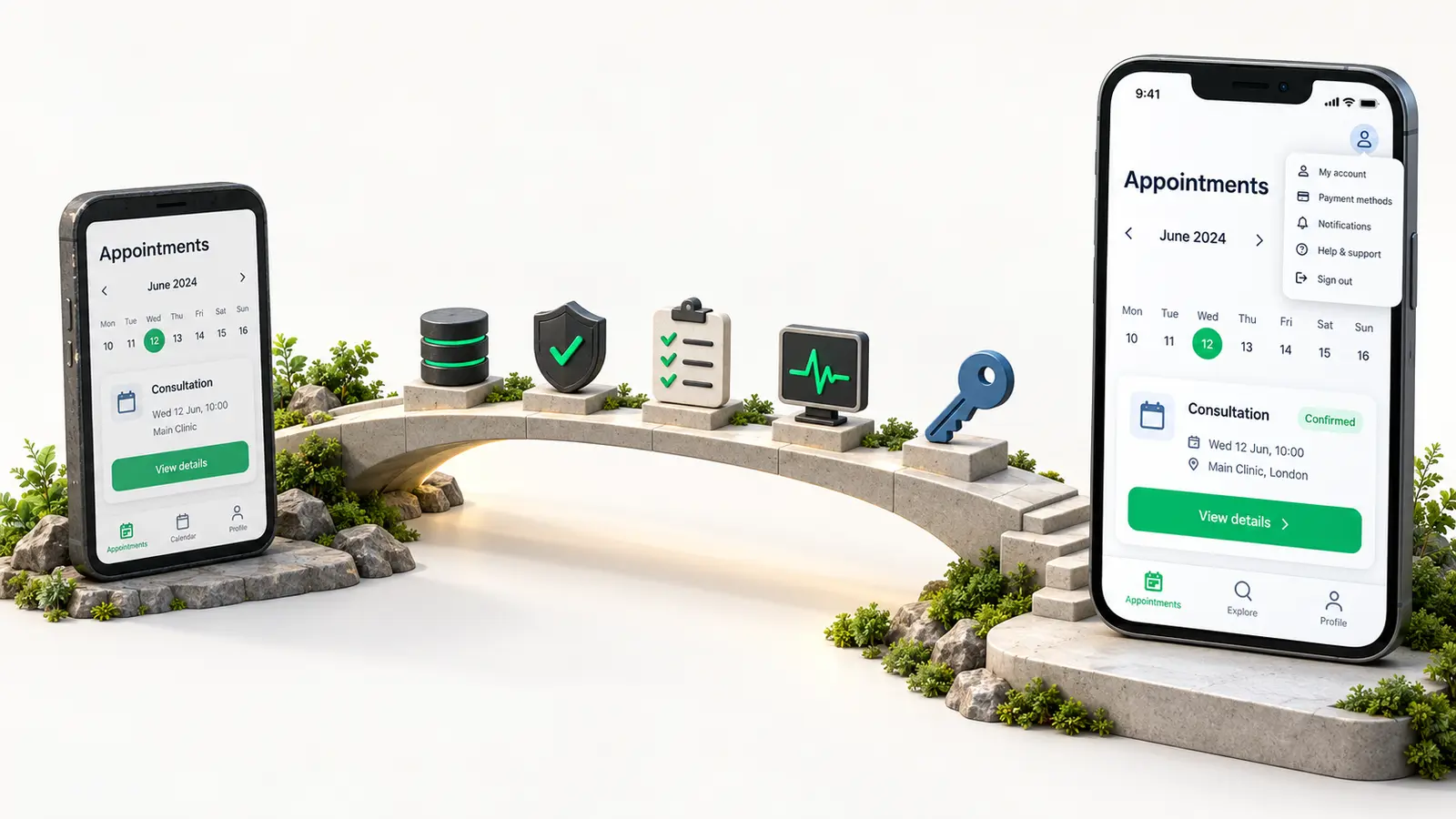
The UK National Cyber Security Centre's secure-development principles treat the code repository and build/deployment pipeline as security-critical parts of the system. The build and deployment guidance recommends protecting repositories, controlling deployments and integrating appropriate testing. A recovery assessment that cannot establish repository and deployment ownership has found a material risk before it has reviewed a single feature.
Use a ten-day recovery assessment
Ten working days is not a magic number. It is a practical timebox for creating enough evidence to make a recovery decision without letting analysis become another open-ended project.
A smaller product may need less. A complex or regulated platform may need more.
The structure below separates product, delivery, technical, commercial and team causes so that one visible symptom does not dominate the diagnosis.
Days 1–2: establish the product truth
Start with the business outcome.
Ask:
- Who is the product for now?
- Which user journeys are essential?
- What does "usable" or "launchable" mean?
- Which commitments have actually been made?
- What evidence shows the remaining scope matters?
- Which scope has been added since the original plan?
- Which decisions are still unresolved?
Then classify existing scope into:
- required for the immediate outcome;
- useful but deferrable;
- unsupported by evidence;
- obsolete because the business changed;
- technically necessary enabling work.
A delayed project often contains an old backlog that has accumulated requests without preserving the original outcome.
FlutterCraft's guide to why software projects exceed budget explains why scope, assumptions, integrations and delayed decisions should be made explicit rather than hidden inside delivery estimates.
Days 2–3: establish delivery truth
Reconstruct the project's actual delivery pattern rather than relying on status labels.
Look at:
- what was completed in the last four to eight weeks;
- what repeatedly moved between sprints or milestones;
- what blocks releases;
- where approval waits occur;
- which tasks are repeatedly reopened;
- how often urgent work interrupts planned work;
- whether progress is measured in usable outcomes or tickets closed.
The GOV.UK Service Manual's agile-delivery guidance provides a useful governance reference by separating discovery, delivery, live operation, prioritisation and progress measurement rather than treating a roadmap as a fixed promise.
A project can be described as "80% complete" for months if the remaining work includes integration, quality and operational concerns that were never understood.
Replace percentage-complete language with evidence such as:
- journey X works in the target environment;
- payment failure state is handled;
- migration rehearsal passed;
- release can be repeated by more than one person;
- production monitoring is configured;
- acceptance criteria are verified.
Days 3–5: audit the technical foundation
The technical review should answer whether the current system can be safely extended, not whether an auditor prefers its style.
Review the architecture and boundaries. Where are the main services, clients and data stores? Which components are tightly coupled? Where do business rules live? Which areas change most often? Are there obvious single points of failure?
Review the build and environments. Can a clean checkout be built? Are development, test and production boundaries understandable? Is deployment reproducible? Are production deployments controlled? Are secrets handled appropriately?
Review quality. Which critical journeys have automated or repeatable tests? What is the defect pattern? Which defects recur? Are failures found before release or by customers? Can the team reproduce reported issues?
Review dependencies. Are core libraries supported? Is a vendor, freelancer or former employee the only person able to change a critical area? Are external APIs stable and documented? Is there an exit path for key suppliers?
Review data and recovery. What is the authoritative source of important data? Are backups configured? Has restoration been tested where required? Are migrations controlled? Is data movement understood?
A technical audit should identify constraints, not produce a beauty score.
A messy but stable module may be less important than a small fragile component that blocks every release. The same principle underlies FlutterCraft's feature-prioritisation approach: make impact and evidence visible rather than prioritising by preference alone.
Days 4–6: identify the primary constraint
By this point, several problems will usually be visible.
Do not treat them all as root causes.
Use a simple constraint statement:
Progress is primarily limited by ______, which causes ______. The strongest evidence is ______.
Examples might be:
- unresolved product decisions causing repeated rework;
- deployment fragility making every release expensive;
- incomplete backend contracts blocking two client applications;
- one external dependency controlling access to production;
- unstable data models causing repeated migration fixes;
- no agreed acceptance criteria causing endless "almost done" work.
Then list secondary symptoms separately.
For example, in an illustrative project:
Primary constraint: authentication ownership is unclear across two services.
Secondary symptoms: duplicated user records, inconsistent permissions, failed onboarding tests, slow mobile integration.
Fixing the symptoms independently may create more complexity. The constraint statement focuses the recovery.
Days 6–7: classify assets as keep, repair, replace or retire
Do not force the entire project into one verdict.
Classify major assets individually.
Keep
The asset works, is owned, understandable enough and supports the intended product.
Repair
The asset has a clear problem but remains cheaper or safer to improve than replace.
Replace
Replacement has a specific reason: unsupported technology, unacceptable security exposure, wrong fundamental model, severe coupling or an external dependency that cannot meet requirements.
Retire
The asset no longer supports a validated outcome and creates ongoing cost.
This classification is especially useful when people are emotionally attached either to the existing build or to the idea of starting fresh.
A rewrite is one option. It is not the definition of rescue.
Days 7–8: choose the recovery path
Use five possible outcomes.
Recover in place
Choose this when the foundation is workable and the main problems are bounded.
Typical actions include reducing scope, repairing release automation, consolidating one high-risk area, adding missing critical-journey tests, and clarifying ownership and acceptance criteria.
Re-scope
Choose this when the technology can support the product but the committed scope is too broad for the current time, budget or evidence.
The aim is not to relabel unfinished work. It is to define a smaller complete outcome.
Choose this when one platform, service or component is the primary constraint, but the rest of the system has value.
Examples could include replacing an unsupported backend service while keeping the client, or moving a brittle integration while preserving the product UI and data model.
Transfer
Choose this when the main constraint is ownership or delivery capability rather than the underlying product.
A transfer plan should include repository access, cloud ownership, deployment instructions, architecture notes, open risks, third-party accounts and a prioritised backlog.
FlutterCraft's technology partner due-diligence checklist is useful when a new supplier will inherit meaningful access or dependency.
Stop
Stop when the remaining product no longer supports a worthwhile outcome, recovery risk is disproportionate, essential ownership cannot be obtained or the commercial case has materially changed.
Stopping can protect more value than spending another quarter defending an outdated investment.
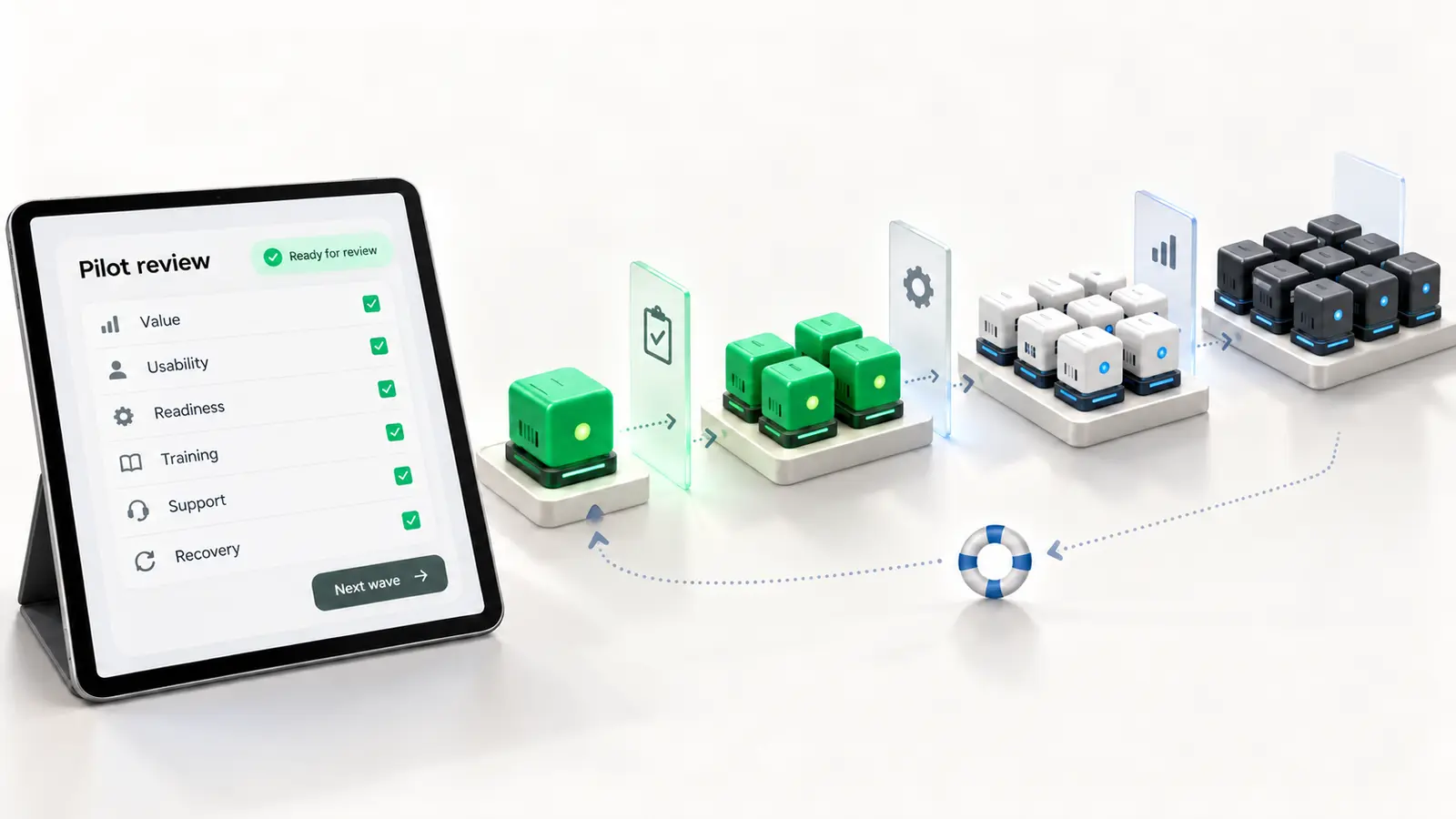
Days 8–10: build the 30-day recovery plan
The next plan should be short enough to verify.
| Week | Goal | Evidence |
|---|
| 1 | Stabilise ownership and critical access | Required accounts, repositories and environments verified |
| 1–2 | Remove the primary blocker | Demonstrable test or deployment evidence |
| 2 | Lock the reduced product outcome | Approved scope and acceptance criteria |
| 2–3 | Complete critical quality work | Key journeys tested and known risks recorded |
| 3–4 | Deliver one controlled release or milestone | Reproducible release, acceptance and monitoring evidence |
| 4 | Review recovery decision | Continue, adjust, transfer or stop |
Do not rebuild a six-month roadmap during the rescue. The first 30 days should prove that the project can move predictably again.
Reset governance at the same time
A technical rescue will fail if the decision system remains unchanged.
Appoint one accountable sponsor for scope and commercial decisions. Appoint a delivery owner to maintain the plan, dependencies and evidence. Then hold one weekly fact review covering:
- what became demonstrably usable;
- what remains blocked;
- what changed in risk;
- which decision is waiting;
- whether the primary constraint is actually reducing.
New scope should state the user or business outcome, what it displaces, the supporting evidence, and the impact on the 30-day recovery objective.
Each material risk also needs an owner, trigger and next action. This is more useful than a long list of red, amber and green statuses with no decision attached.
What not to do during a rescue
Do not blame one team before establishing evidence. A delayed project can reflect governance, product, supplier, architecture and commercial issues at the same time.
Do not change the stack because the new team prefers something else. Technology preference is not sufficient reason to replace working assets.
Do not promise a new date before understanding the constraint. A new deadline built on old assumptions simply creates a second missed deadline.
Do not treat code completion as production readiness. FlutterCraft's prototype-to-production guide covers data, security, testing, operations, support and ownership that can sit outside visible feature development.
Do not optimise every problem at once. Fix the constraint, verify the effect, then re-evaluate.
The first three artefacts to request
A project sponsor should request three basic artefacts immediately:
- Access and ownership map — repositories, cloud, stores, domains, third parties, data and deployment.
- Current product truth — essential journeys, actual status, unresolved decisions and accepted scope.
- Constraint and risk register — the main blocker, evidence, material secondary risks, owners and next actions.
Together, these provide a starting point for the recovery review. They are an adaptable checklist, not a claim about any specific client's project.
The recovery decision
After the assessment, write a one-page decision record.
Include the intended outcome, assets worth preserving, primary constraint, top material risks, chosen path, deliberately deferred work, 30-day evidence and next decision date.
A delayed software project becomes easier to recover when the organisation can distinguish facts from assumptions and valuable assets from sunk-cost emotion.
The goal is not to make the old plan look successful.
The goal is to make the next decision defensible.
If you need an independent view of a delayed product, contact FlutterCraft to discuss a focused project recovery assessment.



 Mubeen AhmadCo-Founder01 Nov 202611 min read00