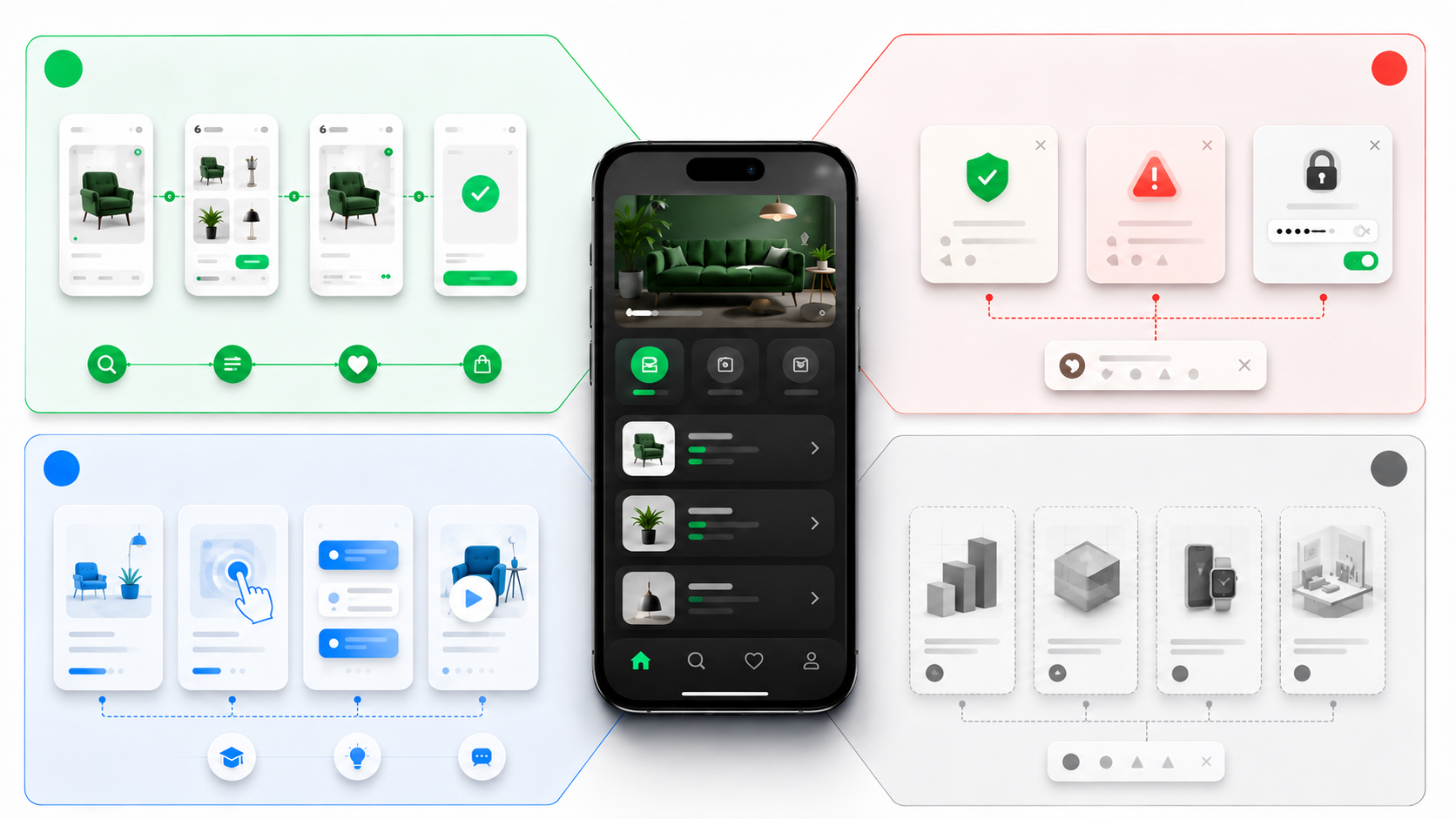
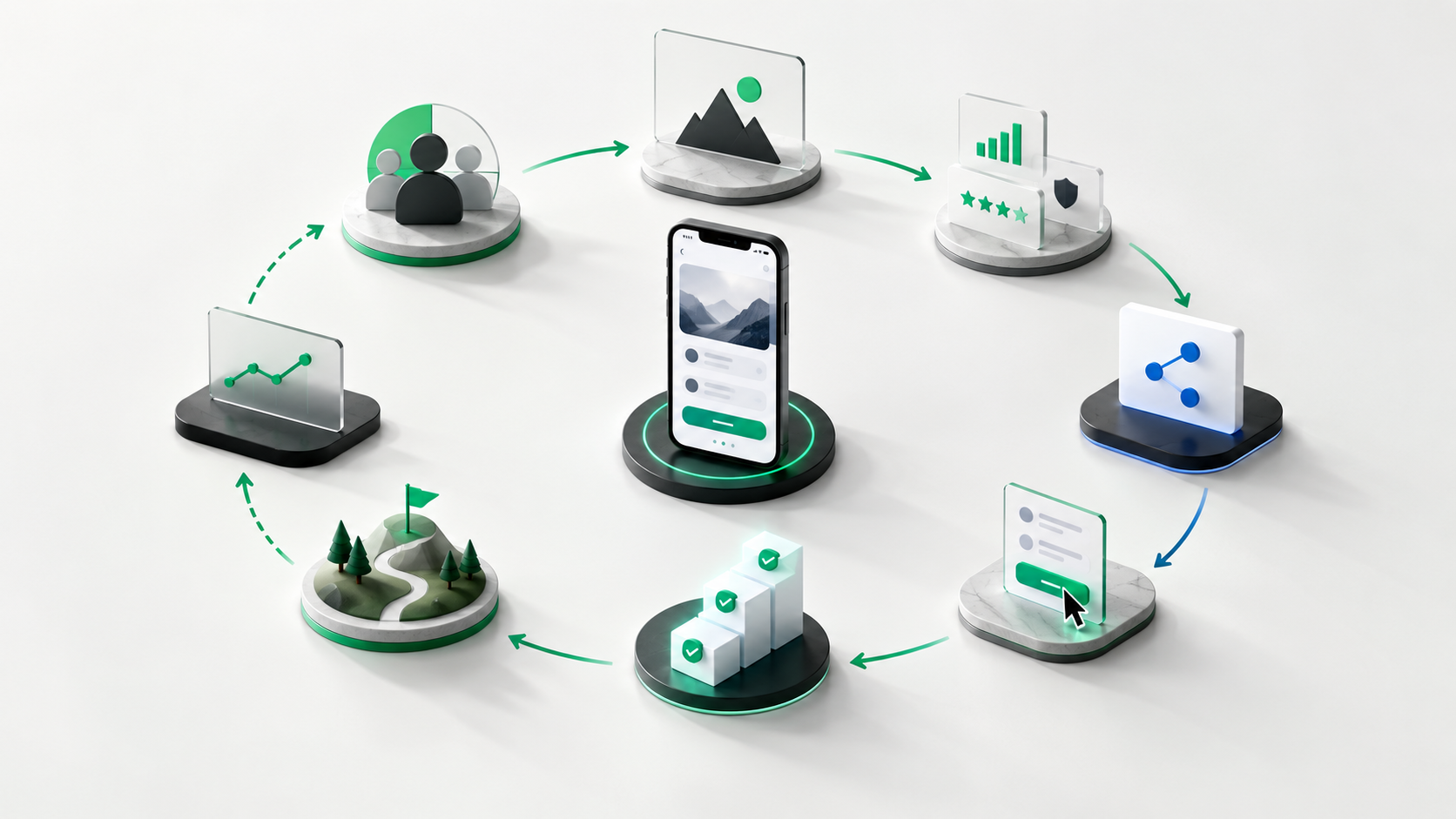
The Short Answer
Digital transformation is not a software shopping list. For a UK SME, it is a structured change to the way customers are served, work moves through the business, decisions are made and improvement is measured.
Start with the business friction that matters most. Diagnose the customer journey, operational process, data quality and team constraints. Establish a baseline. Then sequence small improvements, enabling foundations and carefully governed pilots over time.
The first 90 days should create clarity and evidence. The following 12 months should build capability in stages, with each investment tied to an outcome, an owner and a measurable decision.
This guide is for UK SME owners and operational leaders planning technology investment. It is general strategic guidance, not legal, financial, cyber-security or data-protection advice.
A new CRM, dashboard, accounting tool, AI assistant or customer portal may be useful. None of them is transformation on its own.
Technology changes only create value when people can adopt them, processes can support them, data is reliable enough to use and the business can measure whether the intended outcome has improved.
The Department for Business and Trade's 2025 research on technology adoption among UK SMEs describes adoption as a journey and notes that businesses value reliable, personalised support and advice when navigating adoption challenges. Department for Business and Trade: understanding technology adoption among UK SMEs
That is a useful starting point. The question is not, "Which platform should we buy?" It is:
Which customer, operational or decision-making friction is currently limiting the business most?
A transformation roadmap should make the answer visible.
Start With Friction, Not Procurement
Before selecting technology, identify where work is difficult, delayed, duplicated, risky or opaque.
Look across four areas.
| Area | Questions to investigate | Evidence to gather |
|---|
| Customer experience | Where do customers wait, repeat information or abandon a task? | Enquiries, complaints, conversion steps, support records and interviews |
| Operations | Where do staff rekey data, chase approvals or rely on workarounds? | Process maps, observation, handover delays and error patterns |
| Data and decisions | Which decisions lack timely, trusted information? | Existing reports, spreadsheet dependencies and data-quality issues |
| People and capability | Which changes would create confusion, training needs or resistance? | Team interviews, role mapping, workload and skills assessment |
Do not assume a process needs digitising simply because it is manual. First establish whether the process itself is necessary, clear and valuable.
A poor process can become more expensive when automated. A useful first move may be to simplify the decision, remove a duplicate approval or standardise a data definition before introducing any new system.
Establish a Baseline Before You Promise Improvement
A roadmap needs a starting point. Without one, it becomes difficult to tell whether a project created value or only created activity.
Choose a small set of baseline measures linked to the operational friction you want to address.
| Business outcome | Possible baseline | Example transformation question |
|---|
| Faster customer response | Time from enquiry to first meaningful reply | What prevents the team responding promptly today? |
| Fewer operational errors | Rework, corrections or failed handovers | Where does information become inconsistent? |
| Better visibility | Time needed to prepare a management update | Which decisions are delayed by fragmented data? |
| Improved staff capacity | Hours spent on repetitive administration | Which work should be reduced, redesigned or supported? |
| Stronger customer retention | Repeat use, renewals or avoidable support demand | Which part of the customer journey reduces confidence? |
Use a baseline to guide the programme, not to manufacture a business case. If the data is weak, record that uncertainty and make improving measurement an early roadmap item.
UK SME Digital Adoption: What the Evidence Suggests
The UK SME Digital Adoption Taskforce's final report identifies barriers including the perception that adoption is too hard or costly, lack of expertise and execution support, and the risk of switching from one technology to another. It also recommends a test-and-learn approach: pilot interventions, measure outcomes and adjust based on SME feedback and evidence. SME Digital Adoption Taskforce final report
This supports a sensible SME approach:
- Make the first problem narrow enough to understand.
- Avoid treating a technology purchase as the end of the work.
- Protect time for adoption, training and operational change.
- Pilot where evidence is incomplete.
- Review outcomes before scaling.
AI is a good example. The Office for National Statistics reported in July 2026 that self-reported AI use among UK businesses with 10 or more employees had risen from around 12% in late 2023 to around 35%, while the average number of AI technologies used by adopting businesses had increased only modestly. ONS: artificial intelligence in UK businesses, 2023 to 2026
The practical lesson is not that every SME should adopt AI. It is that adoption should be specific, measurable and connected to a real workflow.
Classify Your Roadmap Items
A balanced roadmap usually needs three kinds of work.
| Roadmap type | Purpose | Typical examples |
|---|
| Quick wins | Reduce a clear friction quickly and safely | Simplifying an internal handover, standardising a form or improving customer updates |
| Enabling foundations | Make later change more reliable and scalable | Data definitions, access controls, integration standards, training and process ownership |
| Strategic bets | Test a potentially valuable new capability | A customer portal, a new digital service, a controlled AI workflow or a new sales channel |
Quick wins build confidence, but they should not become a distraction from foundations. Foundations can feel less visible, but weak data, unclear ownership or poor access control can undermine every later initiative.
Strategic bets should be treated as hypotheses. Define what they need to prove before committing to a large rollout.
Build a 90-Day Diagnostic
The first 90 days should reduce uncertainty before a business commits to a large programme.
Days 1 to 30: Map the current reality
Focus on the highest-value customer and operational journeys.
- Identify the business outcome to improve.
- Map the current process from trigger to completion.
- Record manual steps, duplicate work, delays, dependencies and error points.
- Identify systems, spreadsheets, inboxes and informal workarounds.
- Speak to the people who do the work and the customers affected by it.
- Capture the current baseline and the gaps in available data.
The output is not a polished slide deck. It is an agreed view of the problems that matter most.
Days 31 to 60: Prioritise outcomes and design options
Turn the diagnostic into a focused set of opportunities.
| Priority question | What a useful answer looks like |
|---|
| What outcome matters most? | A specific customer, operational or commercial improvement |
| Which friction is causing it? | A process, data, system or capability problem stated clearly |
| What evidence supports it? | Process evidence, user input, operational data or validated assumptions |
| What options exist? | Process change, existing-tool improvement, new technology, pilot or no action |
| What constraints apply? | Budget, skills, data quality, integration, privacy, security and timing |
| What should happen next? | A small action with a named owner and review point |
Rank opportunities by expected value, confidence, feasibility and risk. Keep the scoring simple enough that the team can challenge it.
Days 61 to 90: Charter the first pilots and foundations
Choose a small number of workstreams:
- One quick win with a clear operational owner.
- One enabling foundation that reduces risk for future work.
- One controlled pilot where the evidence is promising but incomplete.
Each workstream needs a short charter:
| Charter field | Required detail |
|---|
| Outcome | The improvement the work is intended to create |
| Owner | One accountable person with authority to make decisions |
| Scope | What is included and deliberately excluded |
| Baseline | The current measure or evidence point |
| Success condition | What would justify continuing or scaling |
| Stop condition | What would cause the work to pause, change or end |
| Adoption plan | Who needs to change behaviour and how they will be supported |
| Review date | When the team will examine evidence and decide what happens next |
Create a Staged 12-Month Roadmap
The following structure can be adapted to the size and maturity of the SME.
| Horizon | Main objective | Work to prioritise | Decision gate |
|---|
| Months 1 to 3 | Understand the highest-value friction | Diagnostic, baselines, quick wins, ownership and pilot charters | Are the chosen problems real, important and actionable? |
| Months 4 to 8 | Build reliable capability | Process redesign, data foundations, integrations, training and controlled pilots | Are users adopting the change and are outcomes improving? |
| Months 9 to 12 | Scale only what has earned investment | Extend successful pilots, improve resilience, document operations and retire weak approaches | Is the capability repeatable, supportable and commercially worthwhile? |
A roadmap should remain a decision system, not a promise that every item will be delivered exactly as originally written. Review it quarterly and update it when evidence changes.
Sequence People, Process, Data, Security and Technology
Technology work often fails because a necessary non-technical dependency was ignored.
Use this sequencing check before approving an initiative.
| Dimension | Question to answer |
|---|
| People | Who will use, support and own the change? |
| Process | What workflow will change, and is it already clear enough to improve? |
| Data | What information is required, who owns it and how reliable is it? |
| Integration | Which systems, suppliers or teams must connect? |
| Security | What access, resilience and incident considerations apply? |
| Privacy | Is personal data involved, and has the right advice been obtained? |
| Technology | Is new software genuinely needed, or can the outcome be reached another way? |
| Measurement | What result will demonstrate value, risk reduction or learning? |
The ICO says organisations should consider data protection at the design stage and throughout the lifecycle of a system, service, product or process. ICO: data protection by design and by default
For software changes, the NCSC recommends treating security as an ongoing concern across development, deployment and management rather than a one-off final check. NCSC: secure development and deployment guidance
Where privacy, security, sector regulation or contractual obligations are material, involve appropriately qualified advisers early.
Run Pilots That Can Lead to a Real Decision
A pilot is useful only when it answers a question the business is prepared to act on.
A weak pilot says: "Try this new tool with a few people."
A stronger pilot says: "For six weeks, test whether this workflow reduces response time for one defined customer group without increasing errors or creating unacceptable support effort."
Before a pilot starts, agree:
| Pilot element | What to define |
|---|
| User group | The specific cohort taking part |
| Workflow | The task or journey being changed |
| Baseline | Current performance, effort or experience |
| Measure | The outcome, adoption and quality signals to observe |
| Support | Training, escalation and communication arrangements |
| Risk control | Access, data, operational and fallback arrangements |
| Stop rule | The evidence that would halt or redesign the pilot |
| Scale rule | The evidence required before wider rollout |
A successful pilot may still reveal that the organisation is not ready to scale. That is valuable evidence, not wasted work.
Buying technology before agreeing the problem
A product demonstration can create momentum without proving that the tool addresses the most important friction. Start with the operating problem.
Treating adoption as a communications task
A launch email does not create changed behaviour. Make time for training, support, feedback, leadership ownership and process adjustment.
Measuring activity instead of outcomes
Count outcomes such as reduced effort, improved response, fewer errors or better customer completion. Do not rely only on licences purchased, meetings held or features released.
Scaling a pilot because it feels promising
Move to rollout only when evidence supports value, adoption, feasibility and manageable risk.
Ignoring foundations
Data quality, integration, process ownership, access control and support capability can be less exciting than a new product, but they often determine whether it works.
A Practical First Step
Choose one important operational or customer journey. Map it with the people who experience it. Record the friction, current workaround, baseline and business impact. Then decide whether the right next move is a quick process improvement, a foundation, a pilot or further investigation.
That is a more useful starting point than a broad transformation programme built around a list of platforms.
Conclusion
A practical digital transformation roadmap for a UK SME starts with real business friction and moves through evidence, ownership, foundations, controlled change and measurable outcomes.
Use the first 90 days to understand the operating problem, establish a baseline and create a small set of accountable workstreams. Use the next 12 months to build and scale only the capabilities that have earned investment.
The aim is not to look more digital. It is to make the business easier to run, easier to improve and better able to serve customers.
Sources



 Hassan KhanHead of Strategy & Partnerships22 Aug 202611 min read182